|
|
Latest Articles

New Movies








Foreign



|

Torrent Description
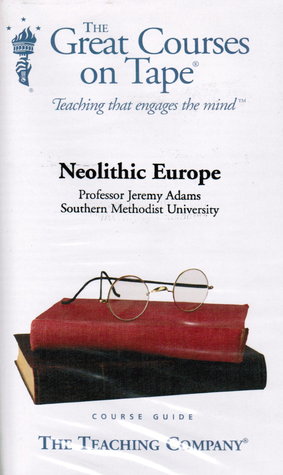 Category: History, Misc. Non-fiction Language: EnglishKeywords: Archaeology Europe History ttc Written by Jeremy Adams Read by Jeremy Adams Format: MP3 Bitrate: 128 Kbps Length: 6 hrs Release date: 2002 This course examines the thesis that the basic characteristics of European culture were firmly fixed during the Neolithic Age. This epoch of human experience from about 8000 B.C. to about 1350 B.C., also called the New Stone Age but more accurately described as the Agricultural Revolution, was the biggest technological shift in human history, establishing patterns of livelihood and social and religious order not decisively changed until the 18th century’s Industrial Revolution. The lectures focus on the Anatolian “proto-city” of Çatal Hüyük in Asia Minor; then three manifestations of the continental “French Culture,” namely, the Cardial, Danubian, and Chassean; and finally, the Windmill Hill Culture of southern Britain, which includes the mysterious cult centers of Avebury and Stonehenge. Professor Adams begins with definitions pertinent to European Neolithic prehistory and includes a discussion of conditions necessary for the invention and maintenance of agriculture and pastoralism and the Agricultural Revolution. The course concentrates on the first highly developed Neolithic culture of southern Britain, the Windmill Hill Culture at Avebury, and ends with a consideration of several aspects of the legacy of Neolithic culture, not only in Western Europe but in general Length: 6 hrs Release date: 2002 This course examines the thesis that the basic characteristics of European culture were firmly fixed during the Neolithic Age. This epoch of human experience from about 8000 B.C. to about 1350 B.C., also called the New Stone Age but more accurately described as the Agricultural Revolution, was the biggest technological shift in human history, establishing patterns of livelihood and social and religious order not decisively changed until the 18th century’s Industrial Revolution. The lectures focus on the Anatolian “proto-city” of Çatal Hüyük in Asia Minor; then three manifestations of the continental “French Culture,” namely, the Cardial, Danubian, and Chassean; and finally, the Windmill Hill Culture of southern Britain, which includes the mysterious cult centers of Avebury and Stonehenge. Professor Adams begins with definitions pertinent to European Neolithic prehistory and includes a discussion of conditions necessary for the invention and maintenance of agriculture and pastoralism and the Agricultural Revolution. The course concentrates on the first highly developed Neolithic culture of southern Britain, the Windmill Hill Culture at Avebury, and ends with a consideration of several aspects of the legacy of Neolithic culture, not only in Western Europe but in general
|


Home - Browse Torrents
ExtraTorrent.st is in compliance with copyrights
2025 ExtraTorrent.st